Chapter 3
Electromagnetism and field theory in the 19th century
3.1 The discovery of the electromagnetic interaction
The 19th century marks the true scientific breakthrough in the study of electricity. While the 18th century primarily investigated electrostatic phenomena, the dynamic relationship between electricity and magnetism was now discovered.
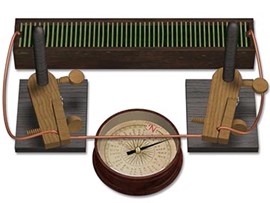
In 1820, Hans Christian Ørsted discovered that an electric current deflects a compass needle. This was the first experimental demonstration of a direct relationship between electric current and magnetic field. This discovery initiated the development of electromagnetism.
Ørsted's observation triggered a wave of intensive research across Europe. Systematic experiments were conducted, particularly in France and Great Britain, to determine the laws governing this new force.
3.2 Ampere and the mathematical description of current
Shortly after Ørsted's discovery, André-Marie Ampère formulated a force law between current-carrying conductors. He recognized that electric currents exert magnetic forces on each other.
His work provided the first quantitative description of electricity in relation to magnetism. The introduction of precise mathematical formulations was a crucial step towards its later technical application.
Ampère's investigations led to the definition of electric current as a fundamental physical quantity. This created a new level of measurability for electrical processes.
3.3 Faraday and the law of induction
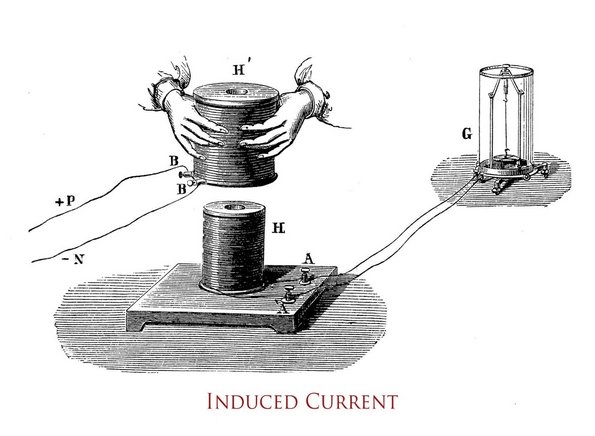
Michael Faraday discovered the principle of electromagnetic induction in 1831. He showed that a change in the magnetic flux in a conducting loop generates an electrical voltage.
This discovery forms the physical basis for:
- Generators
- transformers
- electric motors
- Induction heaters
Faraday's work was characterized by experimental brilliance. Although he had only limited mathematical training, he developed the concept of "lines of force," which was later incorporated into field theory.
Electromagnetic induction was the key to practical energy conversion and thus to industrial electrification.
3.4 Kirchhoff, Ohm and Network Theory
Parallel to field research, the theory of electrical networks developed. Georg Simon Ohm formulated the following law in 1827:
[
U = R * I
]
This simple linear law made it possible to calculate electrical circuits.
Gustav Kirchhoff expanded the analysis with two fundamental rules:
- Node rule (conservation of current)
- Mesh rule (conservation of tension)
These laws made it possible to systematically analyze complex networks. Network theory became the foundation of later circuit technology.
3.5 Maxwell and the unification of the theory
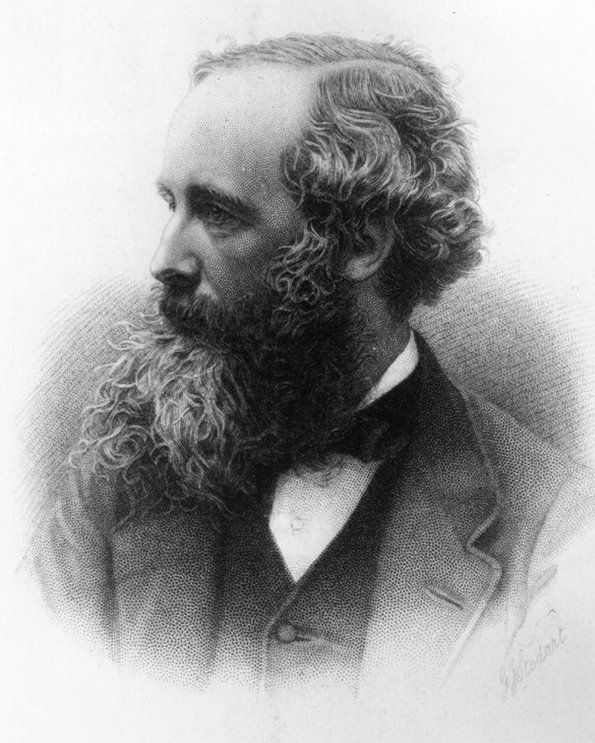
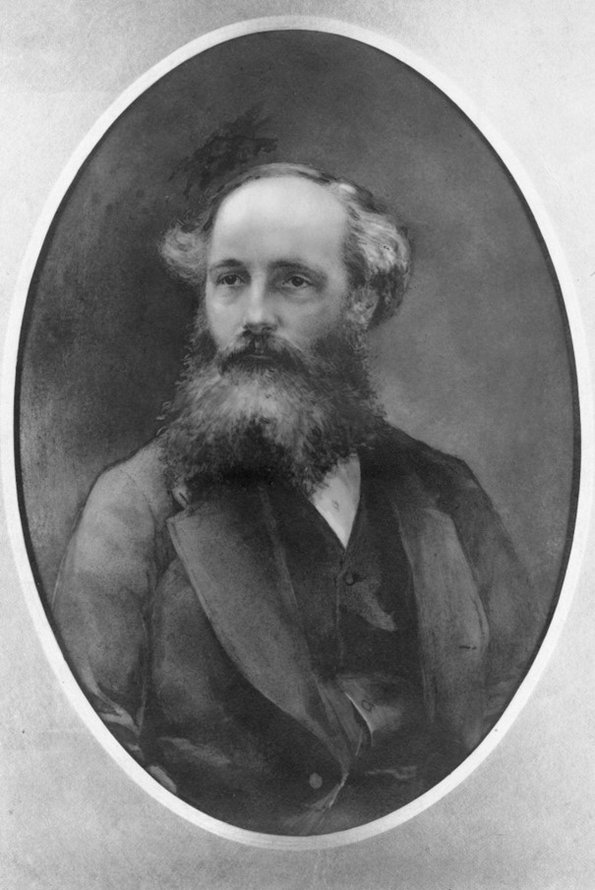
The theoretical pinnacle was reached in the 19th century with James Clerk Maxwell. Between 1861 and 1865, he formulated a system of equations that completely describes electric and magnetic fields.
The Maxwell equations show:
- Electric fields are created by charges.
- Magnetic fields are created by electric currents.
- Time-varying fields each generate the other field.
These equations led to the conclusion that electromagnetic waves exist. Maxwell calculated their speed of propagation and determined that it corresponds to the speed of light.
This led to the identification of light as an electromagnetic wave – a revolutionary discovery.
3.6 Experimental confirmation: Heinrich Hertz
In the 1880s, Heinrich Hertz succeeded in experimentally proving the existence of electromagnetic waves. He generated and detected radio waves in the laboratory, thus confirming Maxwell's predictions.
These experiments opened up the possibility of wireless communication and formed the basis for later radio technology.
3.7 Technical Implementation: Generators and Motors
The scientific findings of electromagnetism led directly to the development of technical machines.
Key developments included:
- The dynamo (self-induction generator)
- Electric motors for industrial applications
- Voltage matching transformers
These devices enabled the large-scale use of electrical energy and led to the second industrial revolution.
3.8 Introduction of standardized units
Increasing industrialization necessitated the international standardization of units of measurement. In the late 19th century, electrical units were systematically defined:
- Volt (voltage)
- Ampere (current)
- Ohm (resistance)
This standardization was crucial for international cooperation, trade, and technical compatibility.
3.9 Significance for modern electrical engineering
The 19th century laid the theoretical and technical foundation for all modern electrical engineering:
- Field theory
- Network theory
- Energy conversion
- Wave theory
For the first time, physical laws were systematically transferred into industrial technologies.
3.10 Summary
Chapter 3 shows that the 19th century was the true birth period of electrical engineering. A coherent scientific system emerged from the combination of experimental research and mathematical theory.
The key achievements of this era are:
- Discovery of electromagnetism
- Formulation of Maxwell's equations
- Development of electrical machines
- Beginning of industrial electrification
This laid the foundation for energy supply, communication and modern technology, which continues to have an impact today.